
Washington Township City Directory Collections
The strongest local lead is a catalog record at the Romeo Community Archives. Its title reads “Romeo Directories (includes Armada, and Washington Twp.),” which puts the township squarely inside the collection’s stated scope. Still, a catalog title is only a doorway. The public record shows no bound-volume title page, no publisher, no first or last year, and no scanned entry. So work the lead like an archivist would. Request a shelf inventory first. Ask which volumes actually include Washington Township. Then confirm any appointment or scan rules before you lean on a particular directory year.
| Collection | Years | Where Held | Access |
|---|---|---|---|
| Romeo Directories, including Washington Twp. | Exact run not published | Romeo Community Archives / PastPerfect catalog | Ask archivist for volume list and appointment details |
| Romeo Observer | 1866–2015 stated | Romeo Community Archives and SLC digital collection | Digitized local-history collection and archive help |
| Obituary index | 1866–1928; 1935–2015 | Romeo Community Archives | Contact archive for 1929–1934 |
| Macomb historical materials | Varies by record type | Macomb County Heritage Alliance | Collection lead, confirm the holding item |
Those limits deserve respect. A catalog title establishes scope, not a complete annual Washington Township city directory run. A missing year might be a gap, an unlisted volume, or simply material that needs a staff member’s confirmation.
Romeo Scope for Washington Township
Romeo District Library serves Bruce, Washington, and Romeo. That explains why township history runs through Romeo institutions. Its Community Archives offers appointment-based research. Coverage spans directories, genealogy, obituaries, newspapers, and Village of Romeo house histories. Both the catalog and the genealogy material name Armada and Washington Township in the Romeo directories’ scope. Email works well for a first contact. Write to rca@romeodistrictlibrary.org with a surname, an address, and the approximate period you want checked. Ask for the volume’s publication details too. The archive sits at the Kezar branch, 107 Church Street in Romeo. Hours change, so verify them before driving over. Research there runs by appointment. Name the township in every request, since other Michigan places share the name Washington Township. The Romeo Community Archives research page lists its published research services.
That service page is the right first stop. Use it to arrange a directory check, an obituary search, or a local-history appointment.
Reading Washington Township Directory Evidence
The collection publishes no scanned entry. As a result, no abbreviation key or field pattern can be described as confirmed. Copy exactly what the page prints. That means spelling, initials, punctuation, street number, page number, title page, and the volume’s stated place scope. Photograph the abbreviation key from that same volume, or transcribe it in full. This preserves real evidence. It also stops a common directory convention from becoming a claim about this particular collection.
| Catalog title | Verified: Romeo Directories (includes Armada, and Washington Twp.). |
|---|---|
| Publisher and edition | Not exposed in the public catalog; verify from a volume title page. |
| Publication year | Not exposed in the public catalog; record it from the inspected volume. |
| Entry fields | No official Washington Township entry scan was exposed; transcribe only fields visible on the page. |
| Abbreviations | Use the key printed in that volume, if present, rather than applying a generic key. |
- Alphabetical listing
- A name-first arrangement, if the volume contains one.
- Criss-cross section
- An address-first arrangement sometimes found in directories; confirm it exists in the specific volume.
- Abbreviation key
- The volume’s own explanation of shortened terms and symbols.
The PastPerfect directory catalog result shows the collection-level evidence available online.
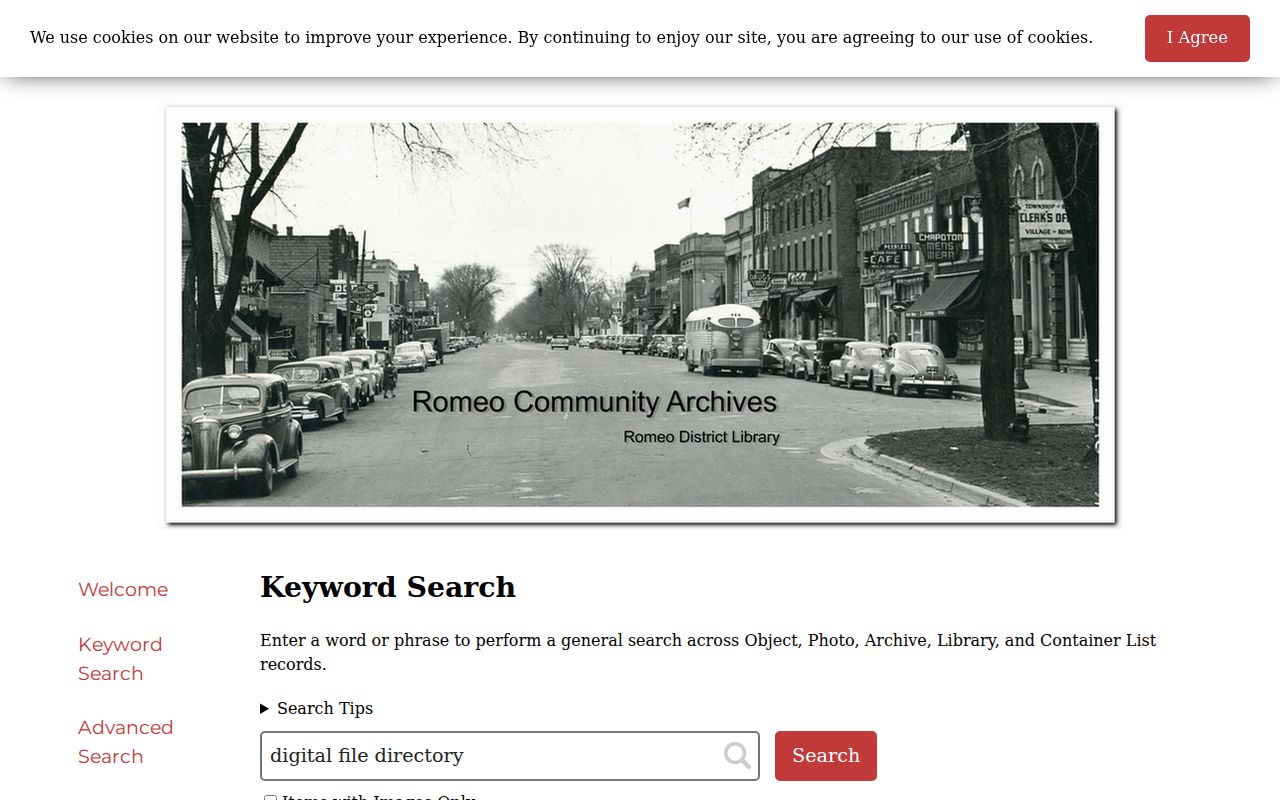
The catalog record proves the collection’s scope; volume-level detail still requires archival inspection.
Washington Township Directory Years in News
Local papers can test a directory finding and supply a date between directory volumes. In its May 2025 completion announcement, Romeo Community Archives listed the Romeo Investigator for 1851; Romeo Argus for 1857, 1860–1862, and 1864; Romeo Hydrant for 1890; Romeo Press for 1937–1939; and the Romeo Observer for 1866–2015. These are newspaper holdings and digitization leads, not directory years, but they are a strong way to check a name, address, notice, or family event.
- Write down the directory volume’s exact year and page citation.
- Search a nearby newspaper period for the name and location label.
- Keep the newspaper date separate from the directory date.
- Use a notice as supporting context, then confirm key facts with the originating record.
The archive’s newspaper digitization update distinguishes the title inventory from the project’s upload history.
The newspaper spans make handy date checks. Use them whenever a directory volume is missing or its coverage is still being confirmed.
Washington Township Directory Library Tools
Romeo District Library’s databases page names three research tools. These are Ancestry Library Edition, Biography & Genealogy Master Index, and the Suburban Library Cooperative Digital Media Archive. Each can surface citations, household clues, digitized local material, or newspaper content. Access rules vary. A database open on a library computer may not work from home. Confirm the current library-card or login rule with the library. Do not assume everything is remote. Treat each database as a discovery route. Then preserve the original publication title, page, image, or record citation. A search hit without that source detail is hard to weigh. It cannot easily be checked against a city directory entry. The Romeo District Library databases page identifies the available research services.
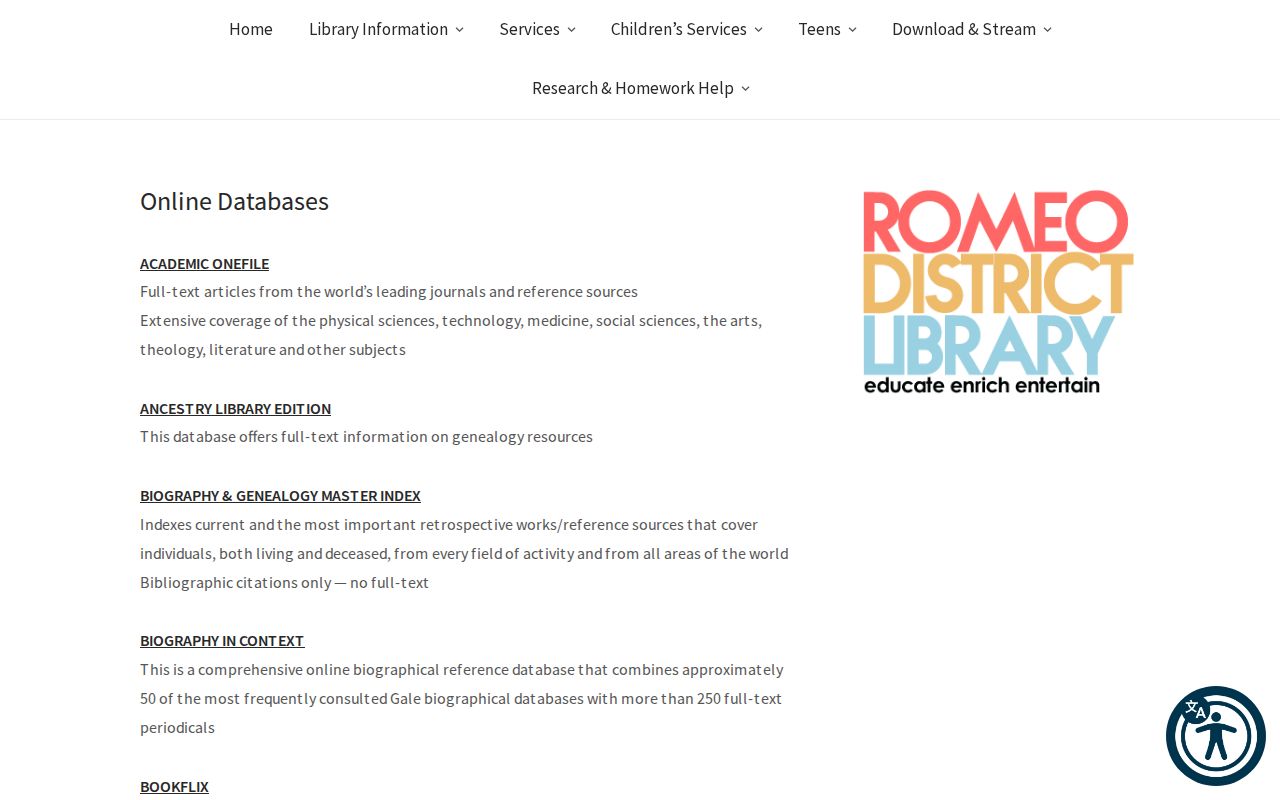
Library databases complement the archive shelf by supplying citation and digitized-material leads.
Washington Township Address-First Directories
A name-first listing and an address-first arrangement answer different questions. Check the volume in hand for a criss-cross section. If one exists, start from the street number and record the name exactly as printed. If not, ask the archivist for help. Another volume, index, or local resource may open address access for Washington Township. Never assume a title called a directory includes a reverse lookup. For a current parcel or legal description, take the address-focused path on the Washington Township streets directory. Keep the distinction tight. A historic directory address is evidence of a listing at a moment. It is not proof of title, household composition, or a location today.
Tracing Washington Township City Directories
Follow a household through several independent sources instead of treating a single city directory listing as final. Start with the exact name spelling and street line in a confirmed volume. Search one edition before and after it, if the archive identifies those editions. Pair the date with the federal census release that covers the period, and check a parcel or recorded instrument if the question concerns a property relationship. An obituary, cemetery record, probate file, church register, or newspaper can help establish an endpoint.
- Record the name, address, volume title, year, page, and every visible notation.
- Compare nearby directory years only after the archive confirms they exist.
- Match the place label carefully, because a record can be indexed under Washington Township, Romeo-area, or Macomb County.
- Use census and newspaper material as dated snapshots, not substitutes for a directory page.
- Keep a source-by-source timeline so a move, name variant, or disappearance can be tested.
Note: A name missing from a directory may reflect a move, an omission, an alternate name form, or a home outside the volume's stated coverage.
Verify with a second volume first.
Washington Township Obituary Index Gaps
The Romeo Community Archives obituary index covers 1866–1928 and 1935–2015. A gap sits between 1929 and 1934. The archive offers a contact route for that interval. An obituary can name relatives, a church, a funeral home, or a service. It can also give a last-place clue. It remains an authored notice, not government proof. When a relationship or a date matters, weigh the details against a death record, probate matter, or cemetery office record.
The Macomb County Heritage Alliance also lists cemetery, obituary, church, and funeral-home leads. It lists probate microfilm, newspaper microfilm, tract-book, plat-map, and local-document leads as well. A resource appearing on that list does not by itself establish Washington Township coverage. See the Alliance resource list for details.
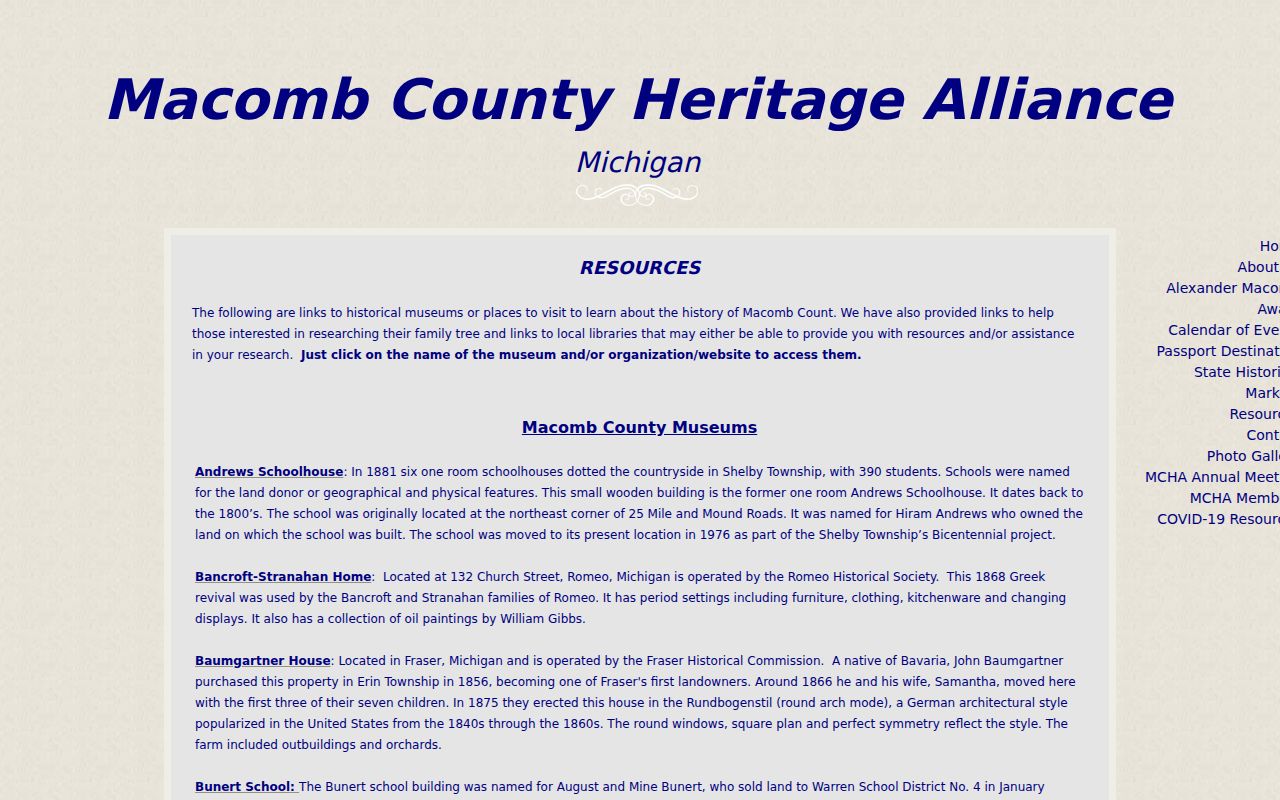
The county resource list can stretch a directory trail further, as long as each collection's coverage question stays separate.
Washington Township Directory Archive Routes
Romeo's materials do not answer every question. The Archives of Michigan county-guide system can then route a search toward Macomb naturalization, probate, tax, and occupational record groups. The guide points to historic custodians. It promises no digitized collection and no street-name search. State and federal census schedules still serve as household snapshots, subject to the federal public-release rule.
A 2025 records-facility announcement explains why older Macomb searches may need staff help. The 2013 old-county-administration-building fire scattered records. The county has since announced a centralized, climate-controlled facility for vital, deed, and election material. That history is reason enough to ask a custodian about an older file. A web search alone never closes the case.
Use the archive, library, county clerk genealogy counter, and state archive guide as separate access routes. Each route keeps a different slice of the record. An online catalog, a digitized newspaper, an appointment-based archive search, and a counter record may each preserve one part of the same historical trail. Note which route supplied each fact. A later researcher can retrace every step.
Start with the Archives of Michigan county guides to identify the next custodian or record group.
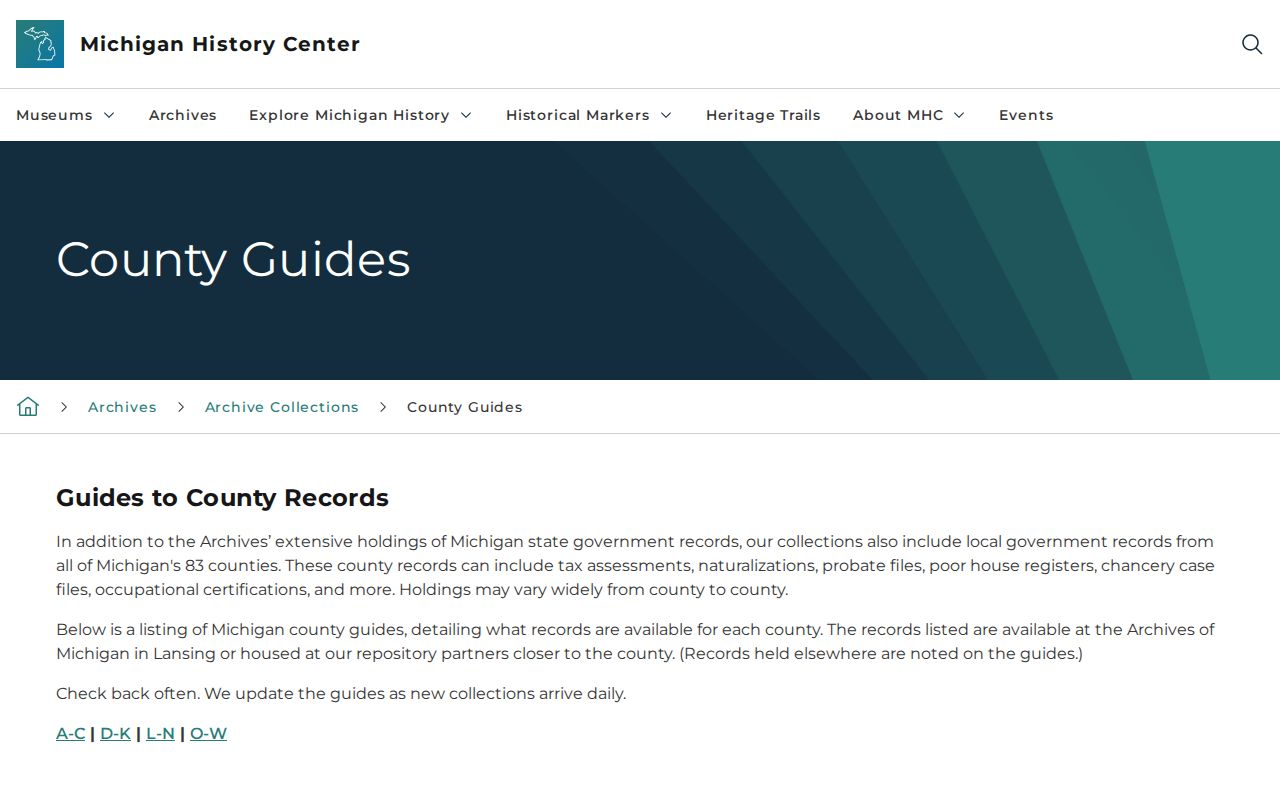
County guides give the search structure. When the local directory catalog and digital collection stall on a name or date, a guide names the next custodian to try.